
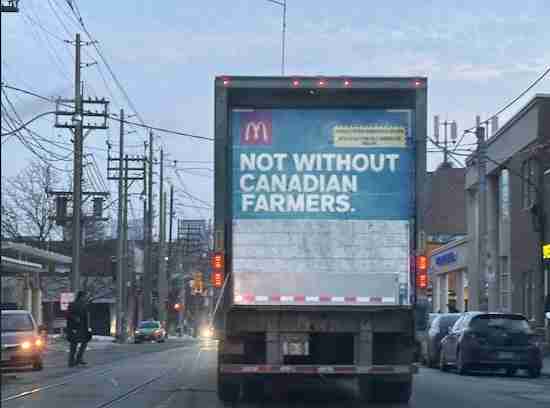
Photo: Jody Berland
“If cattle and dairy cows were a country” …
Prime Minister Carney’s eloquent speech at the recent conference in Davos made headlines around the world. He spoke articulately about the rise of hegemonic countries with unhindered powers and advocated for stronger trade relations between middle powers. His implicit challenge to Trump’s America was welcomed enthusiastically across Canada and around the world. It also inspired controversy. While Carney is asserting Canada’s sovereignty and shared values, his government has cancelled environmental legislation, pursued American-owned pipeline development, imposed a hurtful austerity budget, and announced unprecedented growth in military investment. Why enact a bill (C-15) that permits government to bypass environmental review and Indigenous land rights to build projects in “the national interest?” (See recent SCAN! blogs on this controversy.) It looks a lot like “stealing the future and concealing the theft.”[1]
An Abacus Data Poll conducted in September 2025 reported that concern about climate change in Canada dropped 14 percentage points, from 76% in 2023 to 62% in 2025 – despite severe wildfires! For pollster David Celetto, “[This] …finding should worry anyone who believes climate action is central to Canada’s long-term prosperity. Only 13% of Canadians list ‘climate change and the environment’ among their top three issues.”[2] Their November poll placed climate change 9th in public concern – after the rising cost of living, the economy (apparently a separate thing?), healthcare, Trump, housing affordability, immigration, crime, and job security. [3]
Maybe Carney is being strategic? But looking away from climate change is (to put it politely) hard to understand. Unprecedented wildfires and heat deaths, urgent scientific warnings, David Suzuki’s recent suggestion that we have already lost the battle….. None of this comes cheap.
Avoidance is a complicated issue. A rarely discussed driver of climate change is industrial animal agriculture, also known as factory farming. Most of us would rather not talk about it. This industry and its prolific impact affect the entire natural world, humans and animals, forests and dinners, health and family relations, pets and endangered species, third world and first world, people who don’t want to talk about it, those who care deeply about it. It’s complicated! That’s why this blog has two parts.
Environmental activism has focused on fossil fuels in campaigning to reduce greenhouse gas emissions. This is not surprising, especially in Canada, where resource extraction has been the dominant focus for employment, wealth, and global trade. Our governments continue to align with major investors (not necessarily Canadian) in fossil fuel extraction and have trailed other countries in fostering sustainable energy.But fossil fuels are not the only emission-producing drivers of climate change. Steven Chu, recipient of the Nobel Prize for Physics, President of the American Association for the Advancement of Science, and former U.S. Energy Secretary, surveyed the world’s carbon-polluting industries in a 2019 lecture at the University of Chicago. ‘If cattle and dairy cows were a country,” Chu said, “they would have more greenhouse gas emissions than the entire EU 28…. Humans and the animals we eat are 96 percent of the carbon mass (of mammals) in the world.” With the rapid growth of industrialized animal agriculture, wild spaces and the animals that inhabit them are disappearing.[4] Humans and livestock now make up 95% of the world’s mammal biomass; wild mammals are just 5%.The ever-expanding consumption of cows for meat and dairy, in particular, is gobbling up land use, air and water, spilling greenhouse gases into the air and threatening beloved wild animals around the world. I think about it every time I open a can to feed my pets: it’s love, but it’s cruelty, too. It’s not easy to be a good citizen on this planet.
We don’t see animal agriculture discussed much in the environmental movement. In the prize-winning 2014 documentary Cowspiracy: The Sustainability Secret, filmmaker Kip Anderson bikes around California interviewing environmental organizations about why there was nothing about animal agriculture and climate change in their literature. As explained by the producers:
“Animal agriculture is the leading cause of deforestation, water consumption and pollution, is responsible for more greenhouse gases than the transportation industry, and is a primary driver of rainforest destruction, species extinction, habitat loss, topsoil erosion, ocean ‘dead zones,’ and virtually every other environmental ill. Yet it goes on, almost entirely unchallenged.”[5]
Cowspiracy is a film every SCAN! member should see.[6] The film brought animal agriculture to the climate change agenda. There were debates about its statistics but in big picture terms, they weren’t wrong. Meat consumption has grown like wildfire in recent decades, with alarming environmental effects.
Between 2010 and 2020, the cultivation of land for animal feed erased 26,000 square km of South American forest.[7] In 2023, global loss of tropical forests totalled 3.7 million hectares, equivalent to around ten soccer fields of forest lost every minute. This forest loss produced roughly six percent of estimated global carbon dioxide emissions in 2023. According to Earth.org, “ In the period between August 2018 to July 2019 alone, the Amazon lost over 3,800 square miles, which is equivalent to over 1.8 million football fields, for expansions of pasture for beef production.” When forests are cleared or burnt, reports Climate Council (Aus), “stored carbon is released into the atmosphere, mainly as carbon dioxide.” Carbon dioxide feeds climate change. Forest loss produced roughly six percent of estimated global carbon dioxide emissions in 2023. Add methane emissions, transportation, feed crops, refrigeration, etc. and you have a ball-park picture of the growing meat industry. Football, soccer…. Picture those unimaginably numerous fields of trees evaporating, together with their oxygen, to produce more feed for cows.
Weirdly, Robert F Kennedy Jr. once campaigned against the “factory meat industry” and published a book about it. As Trump’s health secretary, he released a new, inverted food chart with steak at the top, proposing to almost double the animal protein consumed by Americans. “Protein and healthy fats are essential and were wrongly discouraged in prior dietary guidelines,” he insists. “We are ending the war on saturated fats.”[8]
Kennedy’s diet promises more profits to an increasingly concentrated food industry, which has (like Canada’s) strong ties to government. According to a response from The World Resources Institute, (WRI), a non-profit research body, “even a 25% increase in the amount of protein consumed in this way in the US would require about 100m acres of additional agricultural land each year, an area about the size of California, and add hundreds of millions of tons of extra pollution to an already overheating planet.”[9]
Yikes! The U.S. is already one of the world’s largest per capita meat consumers. Millions more of lost acreage, hundreds of tons more pollution: it’s insane!
Why worry about the U.S.’s meat problem? Climate crosses borders. Also, recalling Carney’s comments, a lot of that meat comes from Canada, and they will want more of it.
Of the top ten meat suppliers to the United States, Canada ranked as the largest in 2023, exporting 847.8 thousand tonnes and accounting for 38.8% of the total world exports (2.2 million tonnes). [10] One objective of the Canadian meat lobby is “a 5-year $10 million Market Access for Canadian Meat Exports Program to help Canada’s meat packing and processing industry take full advantage of the export opportunities created by new international trade agreements.” In 2024, Agriculture Canada reports enthusiastically, the red meat industry had annual shipments worth $10.5 billion. [11] Their reports list “value” and “volume” of animals exported, but are silent about the numbers of animals, animal welfare, the industry’s growing land mass, endangered animal species and carbon dioxide . The Ontario Federation of Agriculture argued against considering endangered species in assigning land to farmers. As meat demand grows, so should their industry.
Putting aside what this could do to American health (and health care), imagine what the continuously increasing clearing, planting, spraying, housing, feeding, killing, and transporting, does to our environment. This industry contributes to the spread of wildfires, is the leading cause of the mass extinction of wildlife and is a significant contributor to climate change. Canadians love our wilderness and wildlife. As scientists Ceballos et al write, however: “Our data indicate that beyond global species extinctions Earth is experiencing a huge episode of population declines and extirpations, which will have negative cascading consequences on ecosystem functioning and services vital to sustaining civilization. We describe this as a ‘biological annihilation’ to highlight the current magnitude of Earth’s ongoing sixth major extinction event.”[12]
I had to look up “extirpation.” It’s the complete removal, destruction or eradication of something, the elimination of a species from a geographic area or the surgical removal of a body part. Eliminating a species has a cascading effect on the ecosystem. How much livestock does that take? How many fires? You can learn about species at risk on a Canadian government website dedicated to wildlife. No mention of animal agriculture. The close ties between government agencies and corporate agriculture lobbies are both hidden and obvious.
The Demand-side is Us
Animal agriculture’s role in local and global climate change is also both hidden and obvious. Drawing on a recent study published by the Lancet with research from 37 countries, the Suzuki Foundation’s post on meat and climate change provides these updated statistics:
- Meat and dairy production account for 83 per cent of all agricultural land use, take up 30 per cent of the planet’s land surface and are responsible for 18 per cent ofgreenhouse gases, including methane and nitrous oxide.
- Growing animals for food is inefficient. It takes about five to seven kilograms of grain to produce one kilogram of beef. Each of those takes energy and water to produce, process and transport.
- As global meat consumption increases,so does its climate impact. By lowering your food-related emissions, moving to a mostly plant-based diet will greatly reduce your annual carbon footprint.
- A Boston Consulting Group report concludes that, “for each dollar, investment in improving and scaling up production of meat and dairy alternatives resulted in three times more greenhouse gas reductions compared with investment in green cement technology, seven times more than green buildings and 11 times more than zero-emission cars.[13] (emphasis added)
Eisen and Brown echo these findings: “As global meat consumption increases, so does its climate impact. By lowering your food-related emissions, moving to a mostly plant-based diet will greatly reduce your annual carbon footprint. Ending meat and dairy production could pause the increase of greenhouse gas emissions for 30 years.[14] You don’t hear that every day! Honestly, it doesn’t seem likely at that speed, at that scale. We don’t have government or public support for big changes in what market and policy reports call the “demand-side” of the industry. They mean, the consumers. They mean, us.
We need to look more closely at the silence surrounding this topic. The Intergovernmental Panel on Climate Change and various national governments acknowledge a relationship between animal agriculture and emissions, but “The authorships of both reports are dominated by agricultural (or ‘livestock’) economists” and “both [reports] naturalised the view that demand for meat, eggs and dairy will increase in the future.”[15] Canada’s government is tied closely to industry lobbyists and to American demands. Its complicity makes it (and us) complicit with wilderness loss, species loss, and wildfires. With climate change.
In addition to being increasingly dangerous, meat is increasingly political. It is also personal, cultural, familiar, emotional, and difficult. We grow up and raise children with complicated feelings about meat and other animals. How can we make all this easier to talk about? And what can we do about it?
__________________________________
[1] Timothy Mitchell, The Alibi of Capital: How We Broke the Earth to Steal the Future on the Promise of a Better Tomorrow. Verso Books, 2026. https://www.versobooks.com/en-ca/products/3452-the-alibi-of-capital[2] Abacus Data Poll: Crime and Safety Rise as Top Issue as Parliament Resumes. Liberals and Conservatives tied.
[3] https://abacusdata.ca/abacus-data-poll-federal-liberals-gain-a-bit-of-ground-post-budget-but-stalemate-holds/
[4] https://www.forbes.com/sites/jeffmcmahon/2019/04/04/meat-and-agriculture-are-worse-for-the-climate-than-dirty-energy-steven-chu-says/?sh=b81902011f9d
[5] https://www.cowspiracy.com/about. https://www.cowspiracy.com/about.
[6] Cowspiracy website offers it as a download for $4.95 U.S. It is also available on Youtube for the same price
[7] Richard Twine, The Climate Crisis and Other Animals. Sydney University Press, 2024.[8] Oliver Milman, “Huge amounts of extra land needed for RFK Jr’s meat-heavy diet guidelines” www.theguardian.com/environment/2026/jan/20/rfk-jr-trump-meat-diet-guidelines-land
[9] Milman, www.theguardian.com/environment/2026/jan/20/rfk-jr-trump-meat-diet-guidelines-land .
[10] https://agriculture.canada.ca/en/international-trade/market-intelligence/reports-and-guides/sector-trend-analysis-meat-trends-united-states
[11] https://agriculture.canada.ca/en/international-trade/market-intelligence/reports-and-guides/sector-trend-analysis-meat-trends-united-states[12] Ceballos, Ehrlich and Dirzo, “Biological annihilation via the ongoing sixth mass extinction signaled by vertebrate population losses and declines.” PNAS (Proceedings of the Natural Academy of Sciences of the U.S.), July 10, 2017.
[13] https://davidsuzuki.org/living-green/food-climate-change/[14] Eisen MB, Brown PO (2022) Rapid global phaseout of animal agriculture has the potential to stabilize greenhouse gas levels for 30 years and offset 68 percent of CO2 emissions this century. PLOS Clim 1(2): e0000010. https://journals.plos.org/climate/article?id=10.1371/journal.pclm.0000010 PLOS is a non-profit organization on a mission to drive open science forward with measurable, meaningful change in research publishing, policy and practice.
[15] Richard Twine, The Climate Crisis and Other Animals, p. 141.
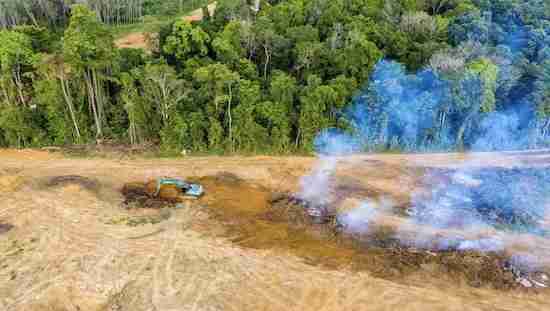
Photo: Richard Whitcombe
*****
Jody Berland is a member of the Seniors for Climate Action Now! Education Committee. She lives in Toronto.