
In February 2025, the federal government released its latest Nationally Determined Contributions or NDCs.
NDCs are at the heart of the Paris climate agreement. Every country which abides by the agreement is obligated to reduce national GHG emissions and is required to ratchet up its ambitions and targets in successive five-year rounds.
NDCs are now being set for 2035.
This round of target setting in Canada reveals two disturbing issues. One is the lack of climate ambition on the part of the federal government. The other is the complete climate failure of the Ontario government.
First the Feds
In its backgrounder to the NDC, the federal government concludes: “The science is clear, the stakes are high, and the time to act is now.”
Unfortunately, the federal government is failing to follow-up on that declaration.
There are two objectives embedded in the Paris Agreement NDCs. One, is setting ever more stringent emission reduction targets and the other, is pursuing “domestic mitigation measures with the aim of achieving the objectives of such contributions”.
Canada’s latest target is to reduce 2035 emissions by 45-50% over the 2005 benchmark year. This is a lacklustre ambition. It lags behind many countries. It is a target that ignores the recommendations of the government’s own Net Zero Advisory Board. The Board called for a 50-55% emissions reduction as well as the introduction of a carbon budget.
It is also a target that will, in all likelihood, be missed. In fact, the government now admits that the 2030 target will likely join Canada’s long list of missed targets. In its NDC submission the government states: “Today, Canada is on track to achieve a 34% reduction below 2005 levels by 2030.”
Recall Canada’s 2030 target is to reduce emissions by 40-45%. Canada is on track to fail. Given recent policy shortcomings (carbon pricing, clean electricity regulations, and emissions reduction caps) and program ruptures (ending EV subsidies and the Greener Home grants) even the possibility of a 34% reduction is suspect.
Ontario is Absent
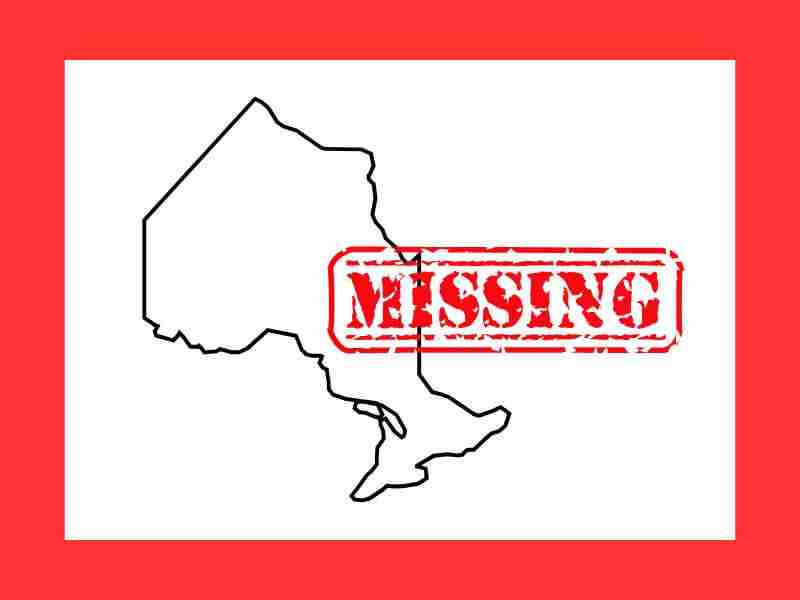
All of that is alarming. But more alarming is Ontario’s complete abdication of any responsibility or commitment to setting and achieving the NDCs.
As part of the NDC process, the federal government invites provinces and territorial governments to express their own targets and commitments to reducing climate wrecking emissions. Appendix 2 of the government’s submission to the UNFCC Secretariat provides a snapshot of provincial and territorial commitments. While climate ambition is uneven across jurisdictions, most provinces (and territories) have clear and escalating targets accompanied by legislation that embodies climate mandates and government accountability.
In this round of NDC commitments the Ford government is absent. There is no report from Ontario.
Ontario now accounts for 23% of Canada’s GHG emissions. That makes us the province with the second highest level of carbon pollution. The number one position is held by Alberta, whose report is also missing.
It should come as no surprise that Ontario is missing from the process because the government of Ontario, unlike most provinces, does not have a climate plan. It doesn’t have a mitigation plan. It doesn’t have an adaptation plan. It doesn’t have a coherent emission reduction strategy.
When the Ford government was first elected in 2018, the Premier promised a ‘made in Ontario’ plan. It immediately watered-down Ontario’s existing climate target to a 30% emission reduction. And it introduced an 8-prong climate strategy that was designed to fail and which was subsequently, and quietly abandoned.
Ontario’s Auditor General undertook comprehensive reviews of the Ford government’s climate plan in 2019 and in 2021. The Auditor General concluded that the climate action claims were not “supported by sound evidence.”
Both reports present a searing indictment of the Ford government’s response to climate breakdown. But in that there is no surprise. As the government’s lawyer in the Mathur et al case revealed, the government’s climate plan “has no compulsory effect on emitters…it is not a law that allows, authorizes, permits, prohibits, or requires any emissions.”
Ford’s climate plan, according to the government’s lawyer, is nothing more than a “glossy brochure” – a “communications project” with no force of law.
Ontario Climate Plan is Abandoned
By 2022 the government had abandoned most of the prongs in the “Made in Ontario” plan. At that time, the government posted a revised forecast for 2030 emission reductions. Gone were the earlier commitments to EVs, the Ontario Carbon Trust, (money for clean tech initiatives), and the large emission reductions previously forecasted for natural gas conservation. The government was still claiming to be a climate leader and was still insisting it was on track to hit the emission reduction targets. But the revised plan was stripped down to a few suspect initiatives:
- Clean fuel standards that will require 15% renewable content (ethanol, biodiesel) by 2030.
- Emission standards for heavy industry that are recognized as considerably weaker than the federal standards.
- The so-called ‘green steel’ transition which uses fossil gas generation to power electric arc furnaces rather than direct coal-fired furnaces.
While other countries and sub-national jurisdictions have been increasing their climate targets Ontario’s reduction target of 30% has been stagnant since Ford was first elected.
Occasionally, the province still refers to the 30% emission reduction target, but gone is all talk of a ‘made in Ontario’ plan.
It seems that Ontario didn’t submit a contribution to the 2035 round of emission reduction target setting because it has nothing to say about the climate crisis.
It is even less willing to act.
The just released annual report of Canada’s GHG emissions makes the case. The inventory always lags by a few years, but it is still the most detailed accounting of emissions we get to see. The 2025 report provides data up to the end of 2023.
The news isn’t good. Ontario’s carbon pollution emissions have gone up yet again.
Ontario’s GHG emissions surged by 5.9 Megatonnes (Mt) between 2021 and 2022. That was a huge one-year increase. It was largest one-year increase in 14 years. Rather than climbing back down from those elevated emissions Ontario chalked up 1 million tonnes (1 Mt) more in 2023. For three years running Ontario has increased climate wrecking emissions. Even Alberta managed to reduce its emissions over the same period. In the last three years Canada’s emissions have gone up by 12MT. Doug Ford’s Ontario was responsible for 10 MT or 83% of the total. Any emission reductions that were achieved by other regions were wiped out by the growth in Ontario.
Four more years of a Ford government takes us perilously close to 2030 and the prospect of failed climate targets.
By that time a number of new highway projects might be underway in Ontario. One for sure is being built. To borrow a phrase from Antonio Guterres, Secretary General of the UN, Ford is building “a highway to climate hell.” That is a highway we need to stop.
For more information about Ontario’s climate plan and climate record see Ford’s Climate Crime # 1 as well as Climate Crime #2
*****
David Robertson is chair of the Ontario Project of SCAN!.
If you found this blog post interesting and informative, please consider joining the Education Committee and helping with our work. We also welcome comments and feedback. Please contact Sue Craig at susan.craig@sympatico.ca