
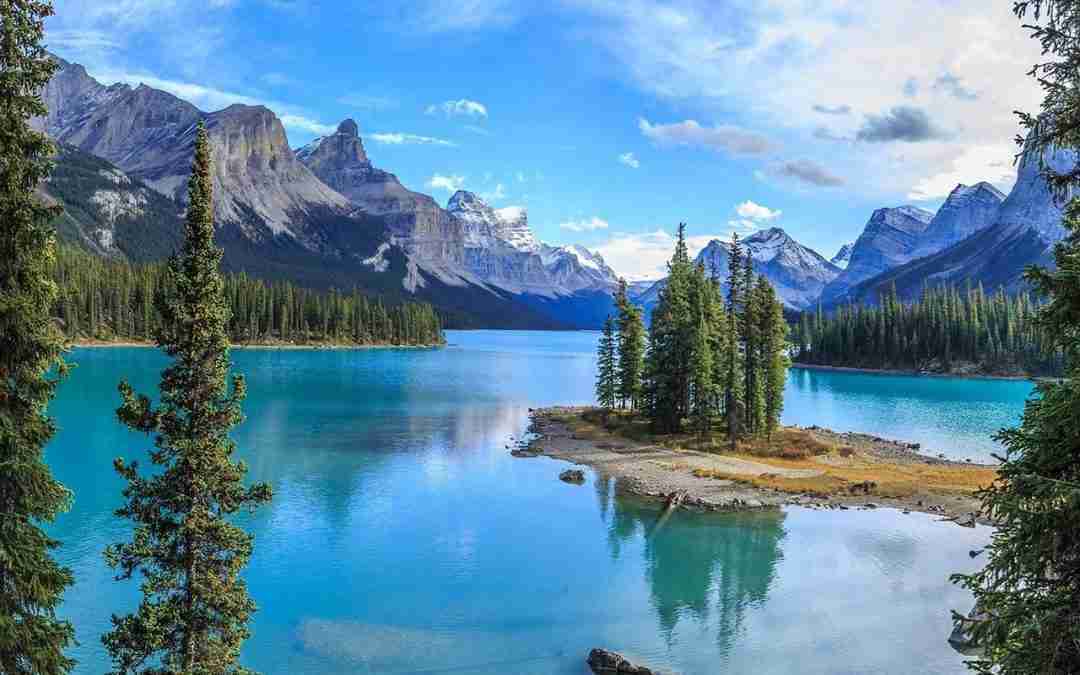
I watched the late-night news on July 24 with dread and dismay. The news showed the Maligne Lodge in Jasper fully engulfed in flames. My family had stayed in that lodge, the Jasper Park Lodge, and other places during our visits to Jasper. We once stayed in the upper floor of a home of an older lady with a working Westinghouse refrigerator of 1930s vintage. My kids were fascinated by it! My daughter worked at the Jasper Sky Tram in the summers when she was at UBC. We did canoe at Maligne Lake and I love the beauty and tranquility of the lake. I have very fond memories of Jasper, much more than I like Banff.
Twenty-five thousand people were evacuated from the Jasper town site and surrounding areas earlier in the day. Later that night, Prime Minister Justin Trudeau says his government has approved Alberta’s request for federal assistance, and will deploy military resources and other emergency supports “immediately.” [1]
I lived in Toronto until 1996. My family visited Jasper every summer because my in-laws lived in Edmonton. We also drove down on the Icefield Parkway to visit the Columbia Icefield Glasier. I had also visited the Glasier many times after I was relocated to Calgary. During my 50 years span of visits to the Glacier, I noticed the distance between the tongue of the Glacier and Hwy-93 had increased significantly. The Glacier is melting and shrinking at an alarming rate! (Personal observation, plus [2]). Climate Change is a major contributing factor to this, and so are the huge forest fires that occur with more frequencies and intensities now (see below).
The recent forest fires in Jasper National Park and other recent major forest fires in Western Canada (and Western United States) have many contributing factors. I shall list a few:
- The shrinkage of the Columbia Icefield and other glaciers in the world are the early warnings of global warming: dryer summers and more extreme weathers have become the new normal. The glaciers in the Rockies feed the rivers in Alberta. As a result, the flow rates and water levels of rivers in Alberta have been significantly impacted by the drought conditions and higher temperatures in recent years. These includes the Bow, Old Man, Red Deer, and the South Saskatchewan Rivers [3].
- The rivers feed the lakes and wetlands. Lower flow rates in the rivers mean lower water levels in the lakes, resulting in less evaporations for rainfalls. Record breaking drought conditions occurred in Alberta in 2019, 2021, 2022, 2023, and we also have a dry summer in 2024 so far [4]. The forests in Alberta (and BC) have become tinder dry in the last several years.
- Once a fire has started in the forest, it could turn into a “Mega Fire” [5]. Some of the recent fires in Jasper National Park are Mega Fires. The main causes of this are: 1. Higher temperature – Rising temperatures and prolonged droughts create drier conditions that fuel larger and more intense fires. Vegetation Density – Accumulation of dead vegetations on the forest floor due to fire suppression practices in the pine forests provide ample fuel for fires to spread rapidly. 3. Wind – Strong winds can drive the rapid expansion of fires across large areas. Strong winds are becoming more frequent in western Alberta, especially on sunny, warm afternoons (personal observations). 4. Human Activities – Land clearings, power lines, accidental ignitions from campfires, ATVs, etc., can contribute to the outbreak and spread of fires in the national parks. 5. Mega Fires burn large stretches of the forests, which release enormous amount of CO2 into the atmosphere that increase the temperature and create more Mega Fires.
- There are wider areas of dead forest due to the infestations of mountain pine beetles (MPB). Dead trees in the forest are ideal fire woods. The MPB is a native species. For millenniums, the population had been kept in check by nature. MPB live underneath the barks of the pine trees and lay dormant during the winters. A good percentage of them were frozen to death when there were periods of cold snaps in in the winters. (A period of cold snaps is 10 or more days of average temperature of below -25C). Due to climate change, periods of cold snaps have become less frequents in the Rockies and this enables the MPB infestations to increase significantly. The higher temperature has also accelerated the lifecycle of MPB, resulting in faster population growth and geographic expansion [6] [7].
- “Zombie Fires”. Also known as Holdover Fires. These are fires that went underground from the previous year and burnt or simmers underground in the roots or other dead vegetations over the winter (under the snow) and reappear in the next spring. These fires will flare up before the official fire season even begins [8]. The snow covers in recent years were not deep enough to extinguish them due to climate change.
- Lightning strikes from thunderstorms with dry lightnings caused by Mega Fire are becoming more frequent and intense. Higher temperature is a major factor. Mega Fires caused by dry lightnings create their own weather phenomenon with pyrocumulonimbus clouds and fire tornadoes. These in-turn crate more forest fires and become vicious cycles [9].
Forest fires used to be nature’s way to re-generate the forests. However, the frequent occurrences of Mega Fires in Western Canada, the United States, and other parts of the world, are not what they were before. Mega Fires cause devastating results and the forests take longer time to regenerate. The numbers of forest fires in each fire season have been increasing steadily in the last decade [10].
How did the Jasper Wild Fire get so out of control? [11]. There are also many other reasons for the intensity and frequencies of large forest fires, too many to list. The important underlying factors are Global Warming & Climate Change, in which the burning of fossil fuels is a major contributing factor [12]. Until the world could address the causes and mitigate them, Mega Fires are going to become the norm with devastating consequences on the climate, the environment, the ecology, human and animal health, the society, and the economy.
References:
[1] Global News. Jasper wildfire: Here’s how quickly flames engulfed a town | Globalnews.ca
[2] https://www.alamy.com/stock-photo/columbia-icefield-receding.html?sortBy=relevant
[3] Alberta Environment and Parks, Water Survey of Canada, Alberta Local Watershed Councils (various articles).
[4] Environment and Climate Change Canada (various articles)
[5] National Interagency Fire Center (NIFC), U.S. Forest Service (various articles)
[6] Canadian Forest Service, Forest Ecology and Management (various articles)
[7] Global News. How much did pine beetles stoke conditions for the Jasper wildfire? (msn.com)
[8] What exactly are ‘zombie’ fires, and how are they affecting wildfires this spring? | CBC News
[9] Pyrocumulonimbus Clouds | Royal Meteorological Society (rmets.org)
[10] Natural Resources Canada. Canada’s record-breaking wildfires in 2023: A fiery wake-up call
[11] How did the Jasper wildfire get so out of control? | CBC News
[12] The IPCC and many reputable scientific organizations and journals have numerous articles on the effects of fossil fuels on global warming.
Stephen Sit is a retired professor who lives in Calgary, Alberta.
If you found this blog post interesting and informative, please consider joining the Education Committee and helping with our work. We also welcome comments and feedback. Please contact Sue Craig at susan.craig@sympatico.ca